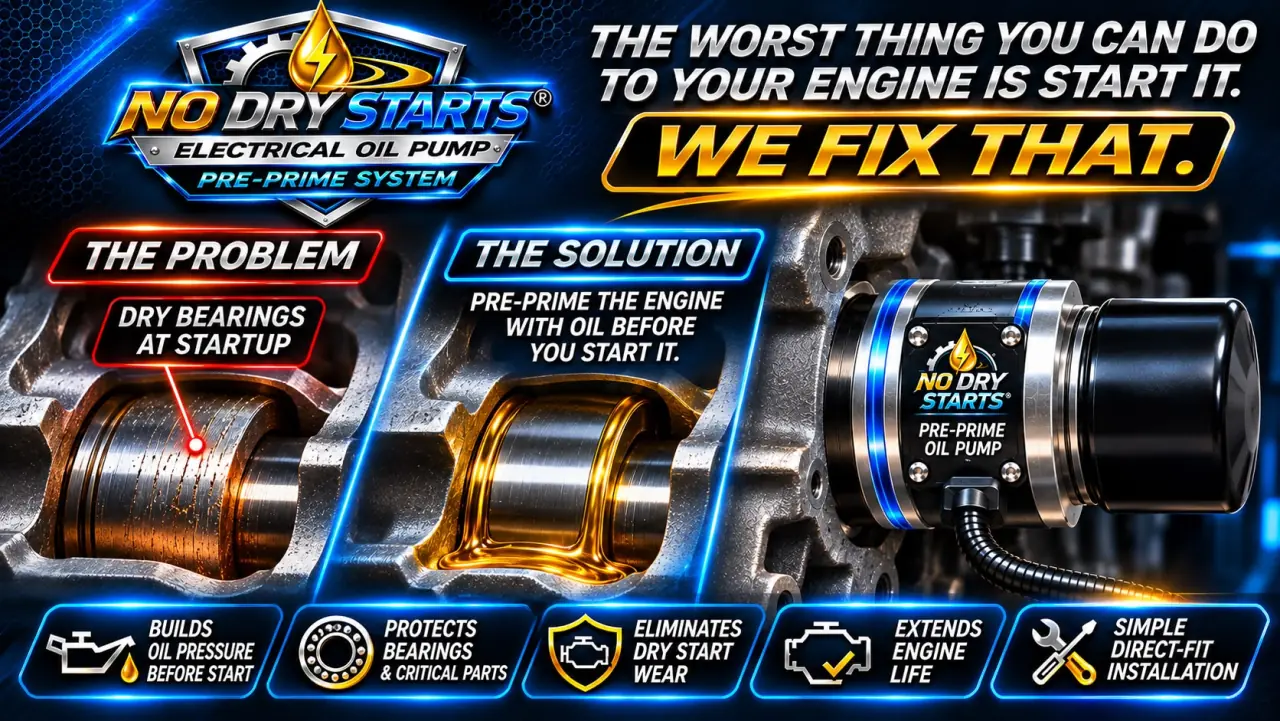
The worst thing you can do to your engine is start it.We fix that.
Every startup begins before full oil circulation is established. No Dry Starts® is developing a compact electrical pre-prime system designed to build oil pressure before the engine turns—helping protect critical components when they need lubrication most.
- Stage
- In prototype development
- Configuration
- Engine-block-to-filter installation concept
- Design goal
- Designed for pre-start oil pressure
Your engine moves before oil pressure is fully established.
After shutdown, oil can drain away from parts of the lubrication circuit. At the next startup, the crankshaft, camshaft and other moving components begin operating while pressure is building. Oil films and residual lubrication still provide some protection, but startup can involve mixed or boundary lubrication—conditions that may increase wear.
- Oil collects in the sump after shutdown
- Critical components need lubrication during startup
Concept illustrationA schematic of an oil circuit, not an engine drawing; real oil paths vary by engine.
 Concept illustration
Build oil pressure first. Start the engine second.
No Dry Starts® is designed to activate an electrically driven oil pump before cranking. The system routes oil through the engine’s lubrication circuit and, in applicable configurations, confirms a pressure threshold before allowing startup. The goal is simple: reduce the interval between engine movement and effective oil delivery.
Step 1: You request a start.
The driver turns the key or presses start, as always.
Step 2: The system pre-primes the oil circuit.
An electric pump moves oil through the engine’s lubrication circuit before the starter turns the engine.
Step 3: Pressure is verified and the engine is permitted to start.
Subject to the final vehicle-specific safety strategy.
 Concept illustration
Designed to fit where the oil filter already lives.
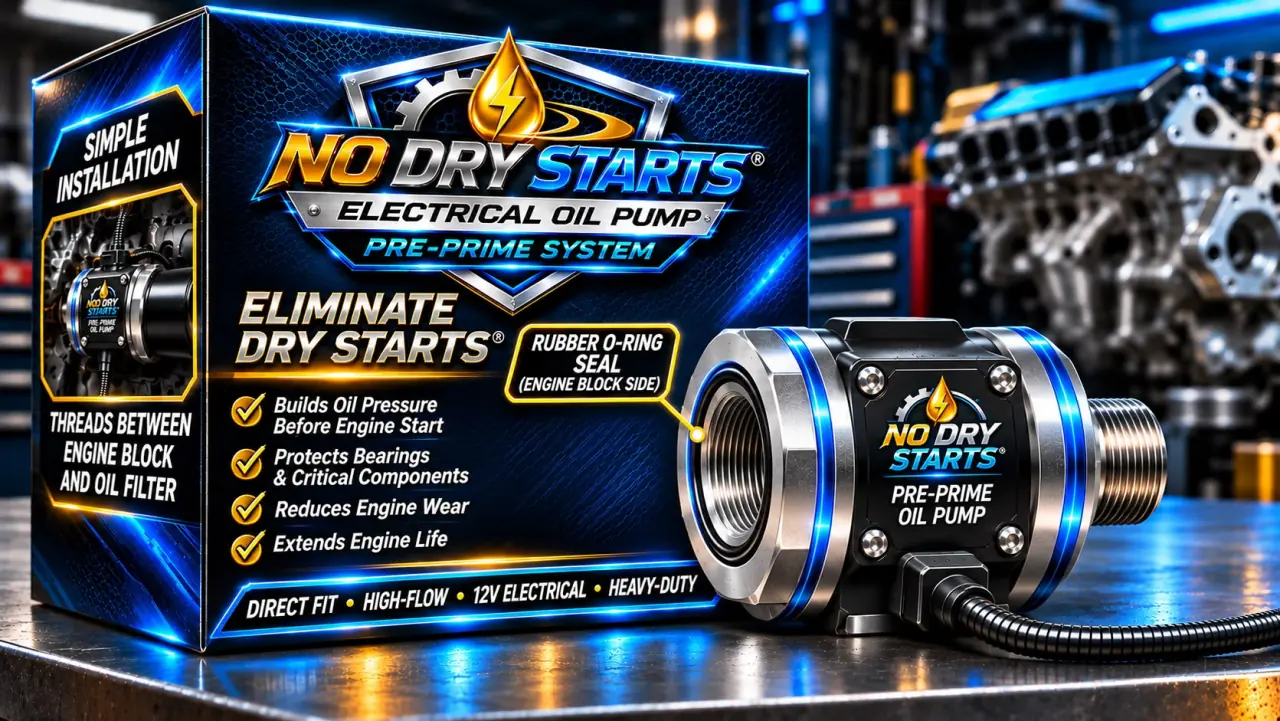
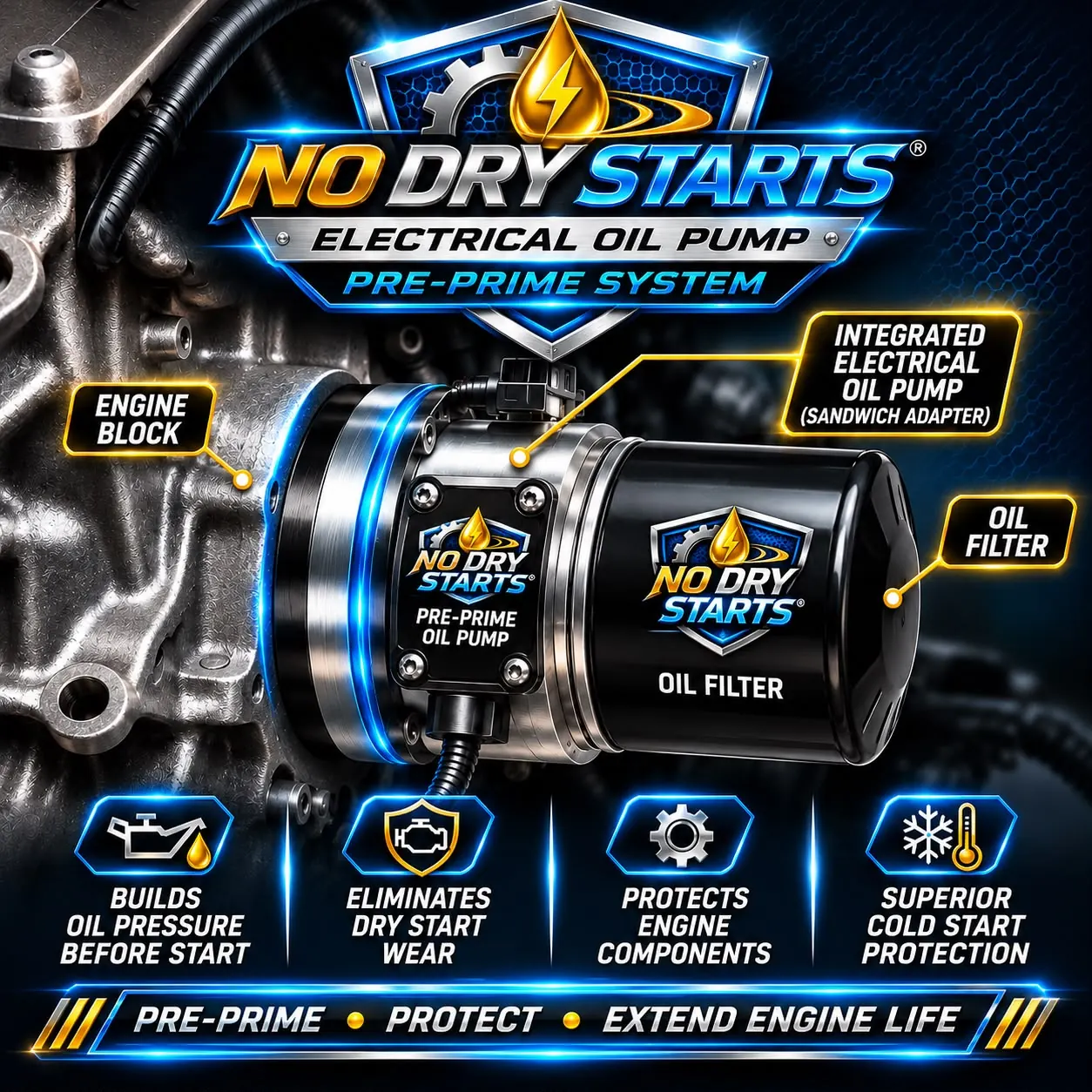
Our lead prototype concept uses a compact sandwich adapter installed between the engine block and a compatible spin-on oil filter. The adapter houses or interfaces with an electric priming pump, allowing a targeted retrofit architecture without requiring an entirely redesigned engine.
- Engine blockWhere the filter normally mounts
- Pre-prime pump / sandwich adapterElectric pump in the adapter
- Oil filterA compatible spin-on filter
 Concept illustration
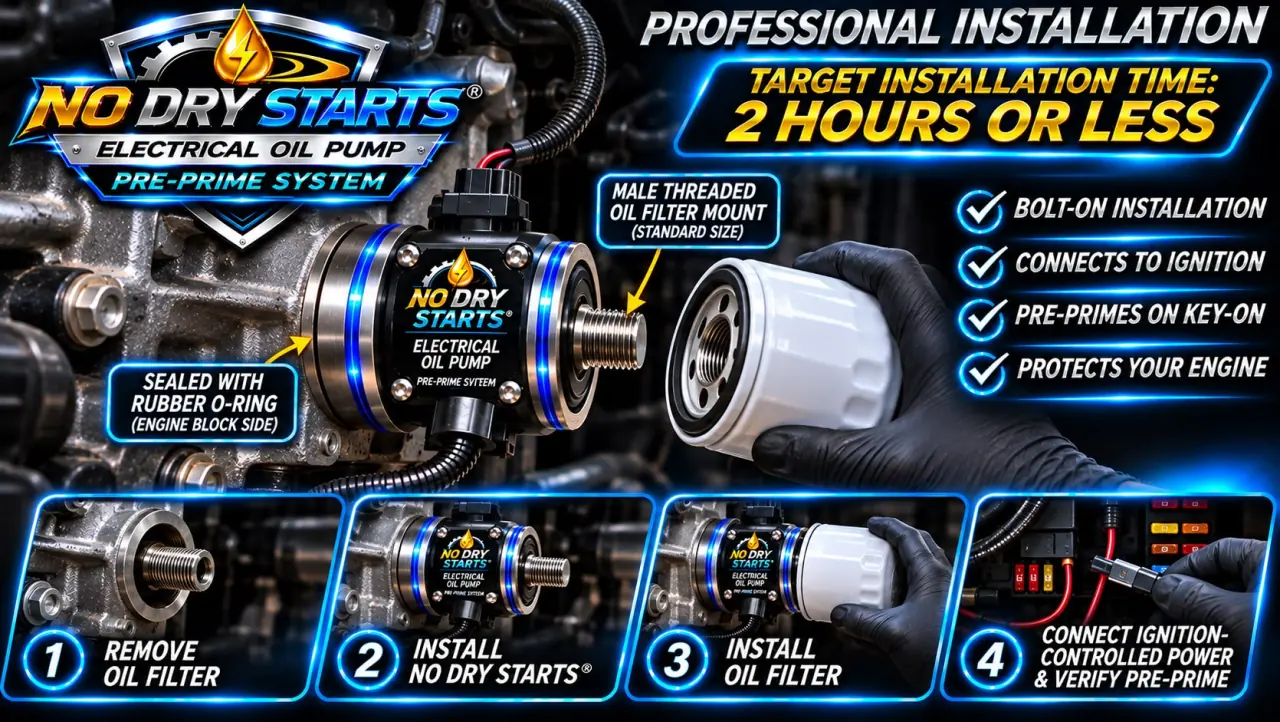 Concept illustration
What the design is aiming for.
Pressure before cranking
Designed to establish measurable oil pressure before the starter turns the engine.
Critical component protection
Intended to reduce startup-related lubrication vulnerability at bearings, valvetrain and other oil-fed components.
Cold-start strategy
Control logic can account for oil temperature, viscosity and pressure response.
Compact retrofit concept
Filter-location architecture may simplify installation on compatible engine platforms.
Intelligent control
Optional pressure sensing, fault monitoring and starter-enable logic.
Long-term potential
Reduced startup wear may contribute to longer component service life; engine-life benefits require testing.
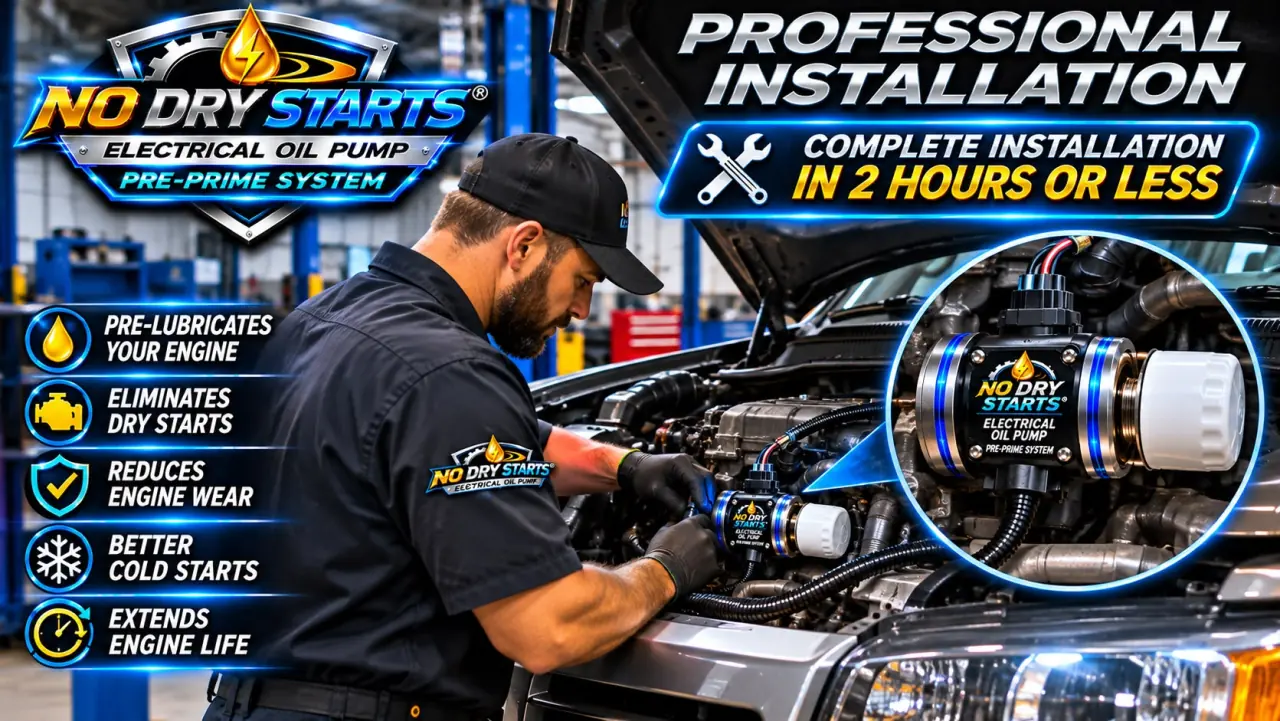 Concept illustration
Traditional startup versus pre-primed startup.
Traditional startup
- Driver requests engine start
- Engine begins rotatingEngine turning
- Mechanical oil pump develops pressure during rotationEngine turning
- Oil circulation increases as engine runs
- Startup lubrication depends on residual oil and pressure rise
No Dry Starts® concept
- Driver requests engine start
- Electric pre-prime cycle beginsEngine still
- Oil pressure is built before crankingEngine still
- Pressure check can authorize startup
- Designed to reduce time spent rotating before oil delivery
Actual behavior depends on engine design, oil viscosity, installation, pump capacity, control strategy and operating conditions. The sequence is shown for explanation and is not to scale.
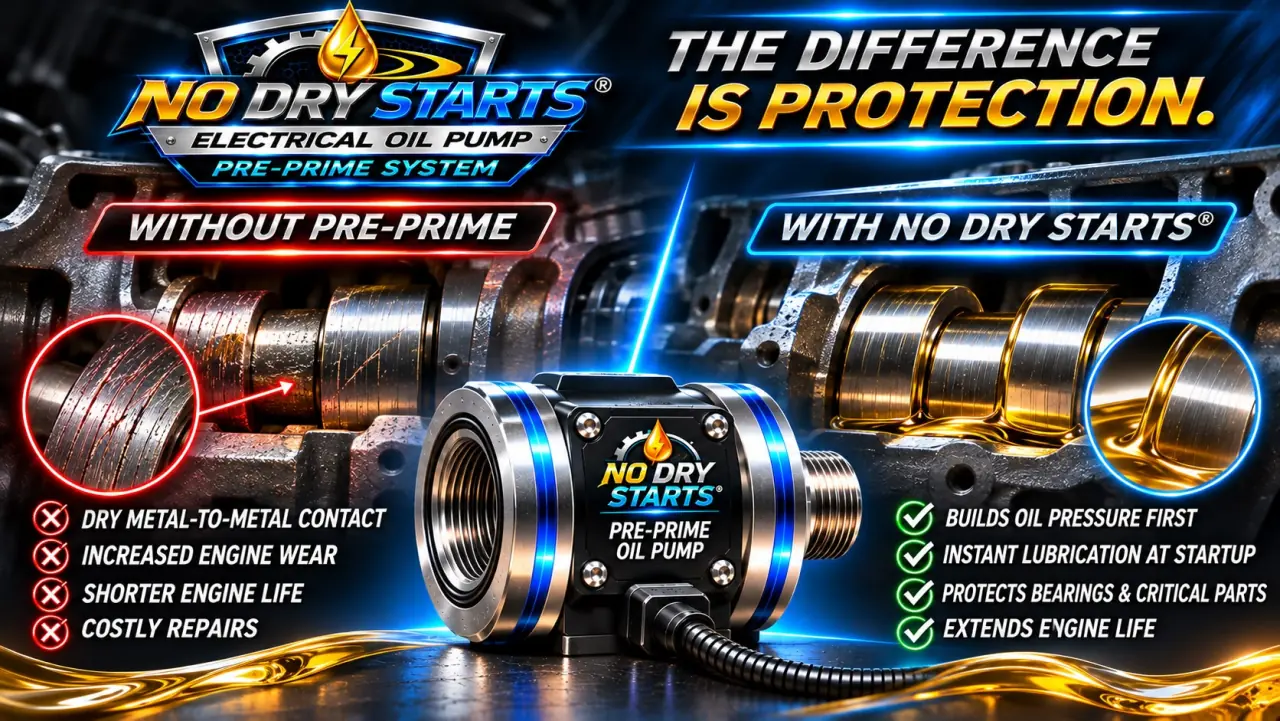 Concept illustration
Engineered to prove the difference.
We are developing a measurable test program to evaluate pre-prime time, oil pressure rise, oil delivery to critical galleries, electrical demand, cold-start performance and component wear indicators. We will publish verified results as prototype testing progresses.
Time to target pressure
No results published yet
Gallery pressure before crank
No results published yet
Cold-temperature performance
No results published yet
Electrical power demand
No results published yet
Flow restriction and bypass behavior
No results published yet
Durability and leak integrity
No results published yet
Any future result will be published with the test engine, method, sample size, baseline, conditions and date.
Illustration only: the pressure dial readings in this image are not measurements. No oil-pressure testing results have been published.
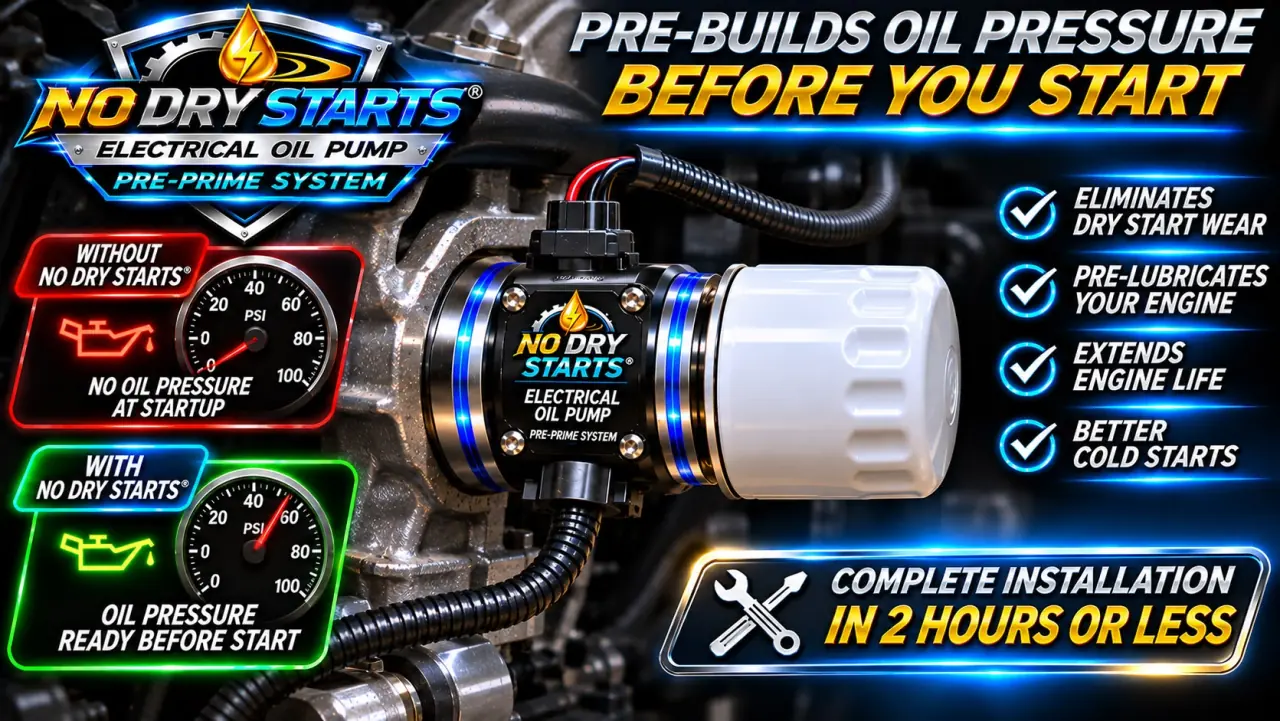 Concept illustration
Help bring smarter engine starts to the road.
No Dry Starts® is in prototype development. Join our update list for progress on testing, compatibility, manufacturing and future availability.
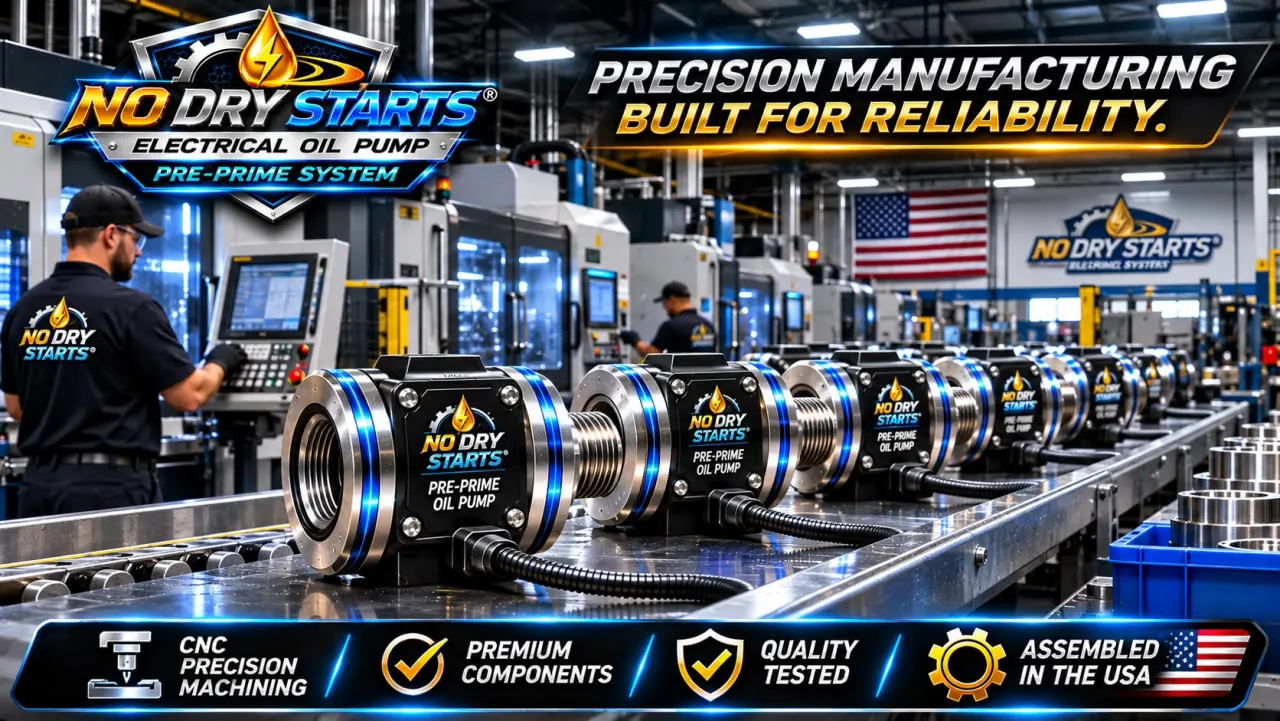 Concept illustration
Questions, answered plainly.
View All FAQsWhat is No Dry Starts®?
An electrical engine oil pre-priming system being developed to establish oil pressure before engine cranking.
Why does startup matter?
After shutdown, some oil drains from engine passages. At startup, lubrication pressure must be re-established. Certain components can experience mixed or boundary lubrication during that transition.
Does an engine start completely dry?
Not necessarily. Residual oil films usually remain, and some engines retain oil in galleries. “Dry start” is shorthand for the period before normal oil pressure and circulation are established.
How does the system work?
The proposed system activates an electric pump before cranking, moves oil into the lubrication circuit, and can use pressure feedback to determine when startup is permitted.
 Concept illustration
Oil pressure first. Engine startup second.
The way engines start has remained largely unchanged. We are working to change what happens before they turn.